
THE SILVER LINING IN THE CLOUD
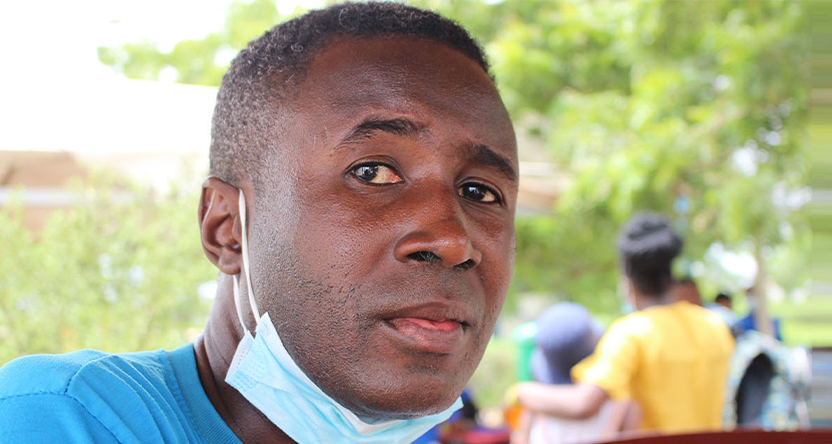
Sometimes it takes what seems to be a misfortune to show us the real blessings in our lives. Having sojourned through the phases of denial through to acceptance of a son’s autism and finally being able not only to smile at the progress he has made but be able to reach out to others; to encourage them too to be accepting and seek help; and to reach out to the society at large is nucleus of the story of AACT and Autism in Ghana. INSPIRATION IS MY SON WITH AUTISM Nortey My son, Nortey was diagnosed with autism at age 2 years, in the United States of America (USA) in 1984. There was very little help at that time, even in the USA. I therefore had to become a stay-at-home mother since there were no early intervention programs. At 4years of age, my son was admitted to preschool and I volunteered in his school where I got a better understanding of autism. When I returned to Ghana in 1998, searching for autism services for my son proved rather difficult. Nortey was sixteen years old with raging hormones, many challenging behaviors, ranging from self-injurious behaviors (Sib’s), aggression, insomnia, to mention a few. Sleep at night was a luxury (I was lucky if I got two (2) hours). What was I to do in a country where there were no services for children with autism? I felt like an outcast, dejected, alone, and petrified! I needed to find support and fast and there was none. I found some solace in church and felt compelled to tell whoever would listen to me talk about my son and autism. Thus, began autism awareness in Ghana. Mind you not all pastors were welcoming, but I kept at it, asking for prayers and giving testimonies of how far God has brought my son and I. My sister was also spreading the word about autism and within a week she noticed a girl in her church that seemed to have autism. Mother denied her daughter’s autism; only attributing child’s condition to a lack of speech. Thankfully I met both mother and child and shared my story with her and amid tears she said she was also a returnee and felt very isolated and confused because of her child’s autism (The stigma one faces with autism in Ghana is horrifying). By word of mouth, I continued to talk to different people about autism and within months I got to know of a few families affected by the disorder. Thus began the autism families support group! Through the awareness campaigns, a few other families joined the support group. Autism did exist in Ghana and I was finding it! I was fortunate to meet a special education teacher and a speech therapist. I hired him to help Nortey at home and the parents in the support group also expressed interest in the training Nortey was getting. The Autism Awareness Care and Training (AACT) was thus birthed in 1998 in a small room at the back of my house. Several years on, we work out of our facility in Haatso and currently, we remain steadfast in our mandate to include, support, educate, and empower autistic persons in Ghana. AUTISM IN GHANA In Ghana, autism is still surrounded by myths, stigma, and fear. Families are often blamed, mothers are labeled as “cursed” or even called witches, and many children are hidden away—denied their basic human rights, sometimes subjected to violence. Even within churches, autism is misunderstood, with families pressured into exorcisms to “cast out demons.” Until 1998, autism was almost invisible in Ghana. Awareness was minimal, and support was nonexistent. Even today, autism is often seen as a “lesser disability” compared to physical impairments. Yet autism affects the whole being—communication, learning, behavior, and social interaction—requiring tailored interventions. Some autistic individuals may have intellectual disabilities, but many others have average or above-average intelligence. Sadly, their abilities often remain untapped due to misunderstanding, discrimination, and lack of opportunity. In schools, autistic children are frequently bullied, neglected, or denied the tools they need to learn. This ignorance is unacceptable—and it is what fueled the birth of AACT. THE WORK OF AACT (AUTISM AWARENESS CARE AND TRAINING CENTRE) For over 20 years, AACT has been a lifeline for children and families affected by autism. We have supported more than 600 children through: Though resources in Ghana remain scarce, international volunteers, therapists, and ABA specialists have strengthened our work. Local volunteers, too, have been invaluable in sustaining our programs. THE JOURNEY SO FAR Starting AACT was not easy. With my husband’s encouragement, we used our retirement savings to set up the centre. Staffing has always been a challenge, since autism was not recognized in Ghana and no formal training existed. But through international partnerships and continuous learning, we have trained many dedicated teaching assistants. What began with just two children in 1998 has grown to serve over 600. Yet the road has not been easy. Caring for a child with autism is exhausting for both parents and caregivers—it often requires one-on-one or even two-to-one support. Despite the challenges, we have pressed forward, fueled by the belief that every child deserves a chance to thrive. Thanks to our persistence, more centres have opened across Ghana, awareness campaigns have spread, and collaboration among parents, schools, and professionals continues to grow. ACHIEVEMENTS Inclusion into mainstream schools: Many of our children have transitioned successfully through early intervention. Behavioral improvements: Families have seen remarkable progress in communication, social interaction, and daily living skills. Capacity building: Parents and teaching assistants have been trained to better support autistic children. RECOGNITION AACT has been honored both locally and internationally, with awards including: LOOKING AHEAD Our dream is a Ghanaian society that is inclusive, compassionate, and supportive of every person with autism. From stigma to strength, from silence to advocacy—our journey proves that change is possible. It was time to AACT for autism in Ghana. And we did
Transition to adulthood for young persons with autism
Developing and improving services to enable smooth transition to adulthood for young persons with autism: The case of NORTEY QUAYNOR Diagnosed with autism from the age of two, Nortey has seen tremendous growth through the years till now. Being the only person diagnosed with autism in his family, Nortey’s journey hasn’t been an easy one. This needed the supported services of his family… A child’s first society is their immediate family.It is therefore imperative that families come to terms with their child’s autism and make a bold statement in the larger society. This will ensure that they are afforded the environment to thrive in. Diagnosed with autism from the age of two, Nortey has seen tremendous growth through the years till now. Being the only person diagnosed with autism in his family, Nortey’s journey hasn’t been an easy one. This needed the supported services of his family… A child’s first society is their immediate family.It is therefore imperative that families come to terms with their child’s autism and make a bold statement in the larger society. This will ensure that they are afforded the environment to thrive in. His mother Mrs. Serwah Quaynor, founded the Autism Awareness Care and Training 22 years ago, to support her son and other children and families affected by autism. Nortey has received the best support services available and it’s evident in his journey of growth. Nortey Quaynor has gone from being able to master his daily Independent Living Skills(ILS) and has mastered some academics(i.e, reading, writing, some arithmetic and data entry). He helps with chores at home and at the centre. He does data entry at the centre and works at a printing press and Inclusion Ghana as a data entry personnel. As an individual,he loves shopping and his outdoor times at Nortey is used to routine and operates better with that. The current lock-down necessitated by Covid19 pandemic has affected this routine and this is not different from other persons with autism. It is for this reason that support services need to be improved to help them through a difficult time like this. Possibilities like Nortey abound if Families, society, groups, individuals, private and state organizations will help contribute to the discussions to improve services for the smooth transition of children with autism into adulthood.